Friday, December 13, 2019
Most corrupt states in India:
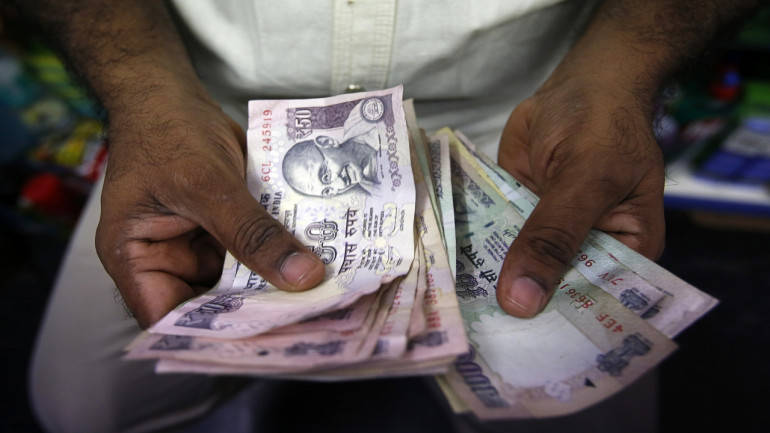
An independent survey which sought around 190,000 responses has revealed that 51 percent of Indian citizens paid a bribe in the last 12 months with property registration, police and municipality being top departments where bribes are allegedly demanded. The survey provides a state-wise indicator of corruption levels, here’s a breakdown of eight most-corrupt states, according to the India Corruption Survey 2019. (Image: PTI)No 8 | Tamil Nadu | Around 62 percent of Tamil Nadu citizens admitted to paying bribes to get their work done. Nearly 35 percent said they had to give bribes several times, while 27 percent paid bribes just once or twice. Only 8 percent said they managed to get the work done without paying a bribe. (Image: Reuters)No 7 | Karnataka | A total of 63 percent residents in Karnataka admitted to paying a bribe to get official work done. Out of this, 35 percent had to give bribes several times while 28 percent paid bribes just once or twice. Around 9 percent said they got work done without paying a bribe. (Image: Wikimedia)No 6 | Punjab | Similar to Karnataka, 63 percent citizens in Punjab accepted to paying bribes to get their work done. From these, 27 percent gave bribes several times while 36 percent paid bribes once or twice. Around 27 percent managed to get their work done without paying any money under the table. (Image: Reuters)No 5 | Telangana | Approximately 67 percent of Telangana citizens said that they paid bribes to get numerous pending work completed. Among these, 56 percent admitted to giving bribes multiple times, while 11 percent paid bribes once or twice. A total of 11 percent said they got work done without paying any money unofficially. (Image: Reuters)No 4 | Uttar Pradesh | Among the participants from Uttar Pradesh, 74 percent admitted to paying a bribe to get their work done, out of which 57 percent gave bribes several times. Around 17 percent had to pay bribes just once or twice, while only 3 percent said they got work done without paying any bribe. (Image: PTI)No 3 | Jharkhand | A total of 74 percent citizens said they had bribe officials to get their work done. Interestingly, all 74 percent had to pay bribes several times while 13 percent said they could get their work done without paying any extra money. (Image: PTI)No 2 | Bihar | In the state, 75 percent citizens said they have paid bribes, out of which 50 percent paid officials multiple times. No less than 25 percent paid bribes just once or twice, while 25 percent said they got their work done without having to resort to a bribe. (Image: Reuters)No 1 | Rajasthan | The state qualifies as the most corrupt, according to the survey with 78 percent citizens saying that they had to bribe officials to get their work done. Around 22 percent had to pay bribes multiple times, while 56 percent paid bribes just once or twice. There were 22 percent citizens who reported that they did not have to pay any extra money to get their work done. (Image: Reuters)







Monday, September 21, 2015
Reservation issue:
Amid the continuing Patel quota stir in Gujarat, RSS chief Mohan Bhagwat has pitched for a review of the reservation policy, contending it has been used for political ends and suggesting setting up of an apolitical committee to examine who needs the facility and for how long.
He said though "interest groups" do get formed in democracy, aspirations of one section should not be met at the cost of others.
"Interest groups are formed because we have certain aspirations in democracy. At the same time, we should remember that through interest groups we should not strive to address those aspirations at the cost of others.
"We should have integral approach of welfare for all. It is sensible to realise that my interest lies in larger national interest. Government also has to be sensitive to these issues that there should not be any agitations for them," Bhagwat told Sangh mouthpiece 'Organiser' and 'Panchjanya' in an interview.
He pitched for constitution of a committee with representatives from the civil society to go into the issue.
"We believe, form a committee of people genuinely concerned for the interest of the whole nation and committed for social equality, including some representatives from the society, they should decide which categories require reservation and for how long.
"The non-political committee like autonomous commissions should be the implementation authority; political authorities should supervise them for honesty and integrity," he said.
Arguing that the policy of reservations based on social backwardness being extended now is not in line with what the makers of the Indian Constitution had in mind, Bhagwat said had quotas been implemented as per the vision of the Constitution makers questions on the issue would not have surfaced.
"If we would have implemented this policy as envisaged by the Constitution makers instead of doing politics over it, then present situation would not have arrived. Since inception it has been politicised," he said.
Sunday, September 20, 2015
Initiatives Modi Govt initiated; promises fulfilled or under process:
When Modi stormed into power in 2014 by winning Lok Sabha election with massive mandate, he delivered a strong message: “We are not here for any positions but for a responsibility”. From bureaucrats to MPs, everyone started falling in line. Be it strengthening foreign policy or launching welfare schemes for low-income group, team Modi has been working hard to fulfil people’s expectations. Here are major initiatives Modi government has achieved since coming to power:
1. Make in India To facilitate investment, boost research & development (R&D), ensure product originality and create skill-based jobs by establishing industrial sector; major national programme was started by Narendra Modi. Modi has reached out to the world with his idea of ‘Make in India’ and it has generated positive response from foreign companies. Key Labour Law reform in the pipeline will boost manufacturing industry and foreign investment in India.
2. Swachh Bharat Abhiyan (Clean India Campaign) Swachh Bharat Abhiyan was launched on 2 Oct 2014 by Modi. Filth is considered one of the major problems in India and Modi gave the issue its due importance by launching a nationwide campaign. Many called it a masterstroke from Modi as it put him at par with Mahatma Gandhi in public perception and also gave people the message to act on hygiene and civic sense. Modi nominated notable personalities from film industry, sports, media, business and other celebrities to promote the initiative.
3. Creation of NITI Aayog to Replace Planning Commission On 1 Jan 2015, Modi formed National Institution of Transforming India (NITI) Aayog, which is a policy think-tank of Government of India that replaced Planning Commission. The panel was abolished along with GOMs and EGOMs which caused policy paralysis under UPA rule. NITI Aayog is headed by PM Modi and its members include top-notch economists, consultants and advisers along the lines of US think-tanks.
4. Jan Dhan Yojana On 15 August 2014, Modi announced Jan Dhan Yojana. Over 15 crore bank accounts were opened in last one year. Main focus has been on reaching every household to provide credit facility, pension and insurance to account holders.
5. Economic Reforms and Policy Implementation Modi-led NDA government’s primary focus is on reviving Indian economy through major reforms in manufacturing and export sector. Government has not only increased the limits of FDI in Railways, Insurance and Defence but also encouraged privatisation of loss-making public sector companies. Without being bogged down by coalition partners, Modi persisted with his focus on transformation. On the infrastructure front, government has already begun work on connecting major metros under Diamond Quadrilateral rail corridor project. Major reforms and developments are under process for Modi’s dream projects: 100 Smart Cities and Clean Ganga Mission.
6. Foreign Policy Put on Fast-track Mode Modi’s foreign policy is currently focussed on improving relations with neighbouring countries and getting the world to invest in India. In the US, he met several American business leaders and invited them to be a part of Make in India programme. During his recent visit to France, he urged Airbus, the aerospace giant, to explore manufacturing opportunities in India. While in Germany, he made a strong pitch for the Make in India initiative. He has been trying to send across the message of a more “competitive, confident and secure” India.
7. Tourism: Tourism featured prominently in the government’s action plan. Its prime target has been to make India a world class travel destination. In last one year, the visa system underwent a major revamp. Introduction of visa-on-arrival service for all leading nations was a key step in this direction. Moreover, growth has been reportedly observed in the number of foreign tourist arrivals after the Modi government came to power.
8. Implementation of Neighbourhood First Policy: One of the major policy initiatives taken by Modi government was to actively focus on improving ties with immediate neighbours. Inviting all heads of SAARC nations to Modi’s swearing-in ceremony was an aggressive and smart move by Modi as a Prime Minister. It gave bold message to the World that no one does swearing-in in Asia like we do. It was the first diplomatic victory for Modi and India started taking itself seriously again.
9. Campaign for Building Toilets PM Modi has initiated a huge project to construct 10 crore toilets by 2019 at an unbelievable rate of one toilet per second. Modi appealed to corporate sector for contribution in this Clean India drive. Positive response has come from IT giant TCS and they have decided to build 10,000 toilets in girls’ schools across the country. An enormous fund of 100 crore has been provisioned for this cause. Oriental Bank of Commerce has announced contribution of 2 crore for building toilets. Bharti Foundation, Adani Group, Reliance Group and Vedanta Group have also pledged support for the campaign and contributed significantly.
10. Confidence-building: Kashmir is an integral part of India but has a long list of complaints against previous governments – both Centre and state. When the flood created devastations in the valley, response from Modi government was immediate and genuine. Modi dedicated constant monitoring system for flood affected areas and people of Kashmir. He also decided to spend Deepawali with Kashmir flood survivors. Even his critics praised his move. After a long time an Indian politician managed to establish a connect with the Kashmiri people.
11. One Rank One Pension : The issue of “One Rank One Pension” (OROP) had been pending for nearly four decades. It is a matter of deep anguish that the various governments remained ambivalent on the issue of OROP.
The Government held extensive consultations with experts and Ex-Servicemen. The main argument for OROP is that the Defence personnel retire early and thus are not able to get the benefits of serving till normal retirement age. Despite the huge fiscal burden, given its commitment to the welfare of Ex-Servicemen, the Government has taken a decision to implement the OROP.
In simple terms, OROP implies that uniform pension be paid to the Armed Forces personnel retiring in the same rank with the same length of service, regardless of their date of retirement. Future enhancements in the rates of pension would be automatically passed on to the past pensioners. This implies bridging the gap between the rate of pension of current and past pensioners at periodic intervals.
Under this definition, it has been decided that the gap between rate of pension of current pensioners and past pensioners will be bridged every 5 years.
Under the OROP Scheme:
The benefit will be given with effect from 1st July, 2014. The present government assumed office on 26th May, 2014 and therefore, it has been decided to make the scheme effective from a date immediately after.
Arrears will be paid in four half-yearly instalments. All widows, including war widows, will be paid arrears in one instalment.
To begin with, OROP would be fixed on the basis of calendar year 2013. Pension will be re-fixed for all pensioners retiring in the same rank and with the same length of service as the average of minimum and maximum pension in 2013. Those drawing pensions above the average will be protected.
Personnel who voluntarily retire will not be covered under the OROP scheme.
In future, the pension would be re-fixed every 5 years.
It is estimated that the expenditure on arrears alone would be ten to twelve thousand crores of rupees. Apart from the fact that the previous government had provided for only Rs. 500 crore in the budget, it is noteworthy that the Koshiyari Committee had accepted the estimate of Rs. 235 crore as additional financial burden to implement OROP. The present government has accepted OROP in true spirit without being constrained by these inaccurate estimates.
OROP was a complex issue. A thorough examination of interests of retirees of different periods and different ranks is needed. The inter-service issues of the three Forces also require consideration. This is not an administrative matter alone. Therefore, it has also been decided that a One Member Judicial Committee would be constituted which will give its report in six months.
Prime Minister Shri Modi has fulfilled his commitment and approved OROP for Armed Forces personnel. Ministry of Defence will soon issue detailed Government Order.”
And Now Small Financing Banks
The RBI’s granting of licences to 10 applicants for setting up small finance banks (SFBs) is a significant step towards extending formal finance access for enterprises now dependent on high-cost unorganised sector funding. Together with the 11 licences awarded for payment banks last month, it marks the beginning of a radical overhaul of the banking structure that will hopefully address the abysmal levels of financial inclusion in India. The SFBs are expected to focus primarily on accepting deposits and lending to small business units, small and marginal farmers, micro and small industries and other unorganised sector entities, currently underserved by regular commercial banks. The RBI estimates that close to 90 per cent of small businesses today have no links with formal financial institutions. The key takeaway of this move is the RBI’s efforts to promote niche banking. Commercial banks are largely interested in funding large and medium corporations, or giving out loans for home and vehicle purchases. On the other hand, it is not easy for diamond cutting and polishing units, job work fabricators or small restaurant owners to get working capital finance support. Lending to them is a specialised affair, just as truck financing is. These are segments where regular banks have gradually withdrawn, with their place being partly taken by various non-banking financial companies. SFBs can probably do even better in filling the gap. The entities that have been given licences are mainly microfinance institutions that have already reached out to remote hinterlands. Currently, they are mainly on-lending funds from banks, which works out to be rather costly for the ultimate small borrowers. Becoming SFBs will allow them to directly take deposits, which will bring down their cost of funds and translate into lower interest rates for clients. Regional rural and urban cooperative banks ought to have performed this role, which they clearly haven’t — not least due to political interference and being weighed down by high fixed costs. The SFBs may be in a better position to exploit the huge business opportunity in funding small and medium enterprises. The RBI expects them to be high technology-low cost operators, while also bringing in innovations in service delivery. It is heartening to see the RBI change its conservative image, which ensured that till early 2014, only 12 new bank licences had been awarded since liberalisation. India needs a more dynamic and flexible banking system. The SFBs and payments banks are a good initiative in that direction. Extending the formal banking system’s reach will also ensure better monetary transmission, important for the effectiveness of the RBI’s own interest rate policy action.
The microfinance business will now be dominated by small finance banks (SFBs) which will bring down systematic risk but at the cost of lower returns, India Ratings and Research has said.
Of the 10 shortlisted candidates for small bank licence by the Reserve Bank of India, eight are micro finance institutions (MFIs), one mainly a commercial vehicle financier and one a local area bank. Earlier this week, the RBI granted in-principle approval to entities to start small finance banks.The total managed loan assets of the 10 SFBs were Rs 20,100 crore and balance sheet size was around Rs 22,200 crore in 2014-15, India Ratings said, adding that MFIs that have received approval as universal banks and SFBs stood at 54 per cent of NBFC-MFI gross loan portfolio in FY15.
Under the banking format they can provide multiple financial products including savings to the under-served individuals and MSMEs, it said.
Reserve ratios and deposit insurance will reduce systemic risk, and over time lower deposit cost could be transmitted to lower lending rates, it added.
The agency said more than 50 per cent of the micro finance landscape could be out of the mandatory purview of the micro finance credit bureaus.
These institutions will, at least for the next two to three years, target the same segment as the balance NBFC-MFIs in most states, it added.
The rating agency further said that SFBs would need to lend to the under-banked, which means higher investment into systems/processes and lending to individuals rather than groups, which will push up credit risk and cost, thus return on assets may decline to 1-2 per cent from 2-3 per cent in FY15.
The agency estimates the microfinance sector to grow strongly at 24 per cent annually over FY15-FY19. Thus the 10 players could be required to replace Rs 20,000 crore of bank loans and at an aggregate net worth of Rs 4,700 crore.
They will need to raise equity of Rs 2,000 crore and Tier 2 capital of around Rs 1,500 crore by 2017-18, it said.
The Reserve Bank of India (RBI) has granted ‘in-principle’ approval for 10 companies to set up small finance banks.
The approval will be valid for 18 months to enable the applicants to comply with the requirements.
The firms include
Au Financiers (India) Ltd., Jaipur,
Capital Local Area Bank Ltd., Jalandhar,
Disha Microfin Pvt., Ahmedabad and
Utkarsh Micro Finance Pvt. Varanasi,
Equitas Holdings Pvt., Chennai,
ESAF Microfinance and Investments Pvt., Chennai,
Janalakshmi Financial Services Pvt., Bengaluru and Ujjivan Financial Services Pvt., Bengaluru. The RBI also granted permission for RGVN (North East) and Microfinance Ltd., Guwahati, and the Navi Mumbai-based Suryoday Micro Finance Pvt.
“Until a regular licence is issued, the applicants cannot undertake any banking business,” RBI said in the press release. The RBI said that it intends to use the learning from this licensing round to appropriately revise the guidelines and move to giving licences more regularly, that is virtually ‘on tap,’ going forward.
The central bank said that it selected the applicants after three different committees contributed to the final decision, backed by a detailed case study of each applicant.
The scrutiny involved assessment of financial soundness, proposed business plan, fit and proper status based on due diligence reports received from the regulators, investigative agencies and banks, said RBI.
“An important factor was proposed reach into un-banked areas and under-served sections of the population,” RBI added. The RBI received 72 applications for small finance banks.an
Friday, September 18, 2015
New Delhi, Mumbai Among World's Cheapest Cities to Live In: UBS
London: London is the fifth most expensive city in the world to live in but wage levels have failed to keep up compared to other major centres, a report by Swiss bank UBS has found.
The British capital ranked behind Zurich, Geneva, New York and Oslo when it came to the relative cost of goods, including rent, but was in 13th place on a comparison of gross salaries.
The study found that whilst it was cheaper to live in Sydney, Copenhagen and Chicago, residents there earned more relative to Londoners.
Rising levels of rent have helped to push up the cost of living in London in recent years with Britain having failed to build enough homes to meet rising needs.
Demand has also risen because of growing levels of net migration and people opting to rent for longer in order to save up for increasingly more expensive properties, the report said.
Meanwhile, earnings have risen more slowly than inflation for most years since the 2007/08 financial crisis although they have begun to pick up robustly this year.
UBS found that London was also far more expensive than comparable European capital cities Paris and Berlin when the price of an average basket of 39 foodstuffs was compared but Zurich, Seoul and New York were the costliest locations.
A Londoner must work 41.2 hours to afford an iPhone 6, twice as long as a resident of Zurich who only needs to work 20.6 hours, it added.
However, the British capital was one of the cheapest places to buy a kilo of bread, with Londoners having to work for just 6 minutes to buy the basic foodstuff, half the time it would take a New Yorker.
UBS said that the decision in January by the Swiss National Bank to abruptly abandon its cap of 1.20 francs per euro, leading to a surge in the franc's value, had hugely altered the indicators.
"Zurich and Geneva rose to the top of the rankings. Eurozone cities plunged," the report said, adding that the crisis in Ukraine had pushed Kiev to the bottom of the price and wage charts.
Among the cheapest places in the world to live were Sofia in Bulgaria, Bucharest in Romania and New Delhi and Mumbai in India, where wages were also among the lowest of the 71 locations compared around the world.
© Thomson Reuters 2015
Wednesday, September 9, 2015
The 7 Habits of Highly Effective People
Be Proactive. Take the initiative. Don’t wait for things to happen. Make them happen.
As candidates describe their major accomplishments, have them describe where they took the initiative, went the extra mile, exceeded expectations, and did more than required. Patterns emerge revealing the types of work the person finds innately satisfying and motivating. Map this to the performance-based job description to determine best fit.
Begin with the End in Mind. Define the outcomes before you create the process.
When I have a candidate describe a major accomplishment, I always ask how the person developed the plan, how they managed against the plan and if they were successful. The best people always begin any major activity with a thorough plan giving full consideration to all of the various alternatives.
Put First Things First. Prioritize what’s important, not just react to what’s urgent.
Find out how people multi-task, getting specific examples and details for each MSA. As part of this, determine how the candidate prioritized different activities and how the person balanced competing objectives. Collectively this is all part of the decision-making process.
Think Win-Win. Consider the impact on all of the stakeholders; how the person deals with superiors, subordinates and peers; and how the person deals with conflict.
Ignore the generic “I’m a real people person.” Instead dig into how the candidate develops team-based consensus. Get specific examples of when the person persuaded people in other functions, including higher-ranking managers, executives, vendors and customers. Thinking win-win is not about capitulating, but about persuading and convincing others, and being persuaded and convinced.
Seek First to Understand, and Then Be Understood. Don’t offer solutions or assume your approach is the best. Understand the problem first.
One of the core MSA questions is: “Can you describe the biggest problem or challenge you’ve ever handled?” As part of the fact-finding, it’s important to find out how the person figured out the root cause of the problem and the process the person used to put together a solution. To best understand this habit, focus on how the candidate reached out to others, modified his or her approach, and achieved group consensus.
Synergize. This is team skills on steroids: working with, influencing, coaching and developing people.
Rather than focusing on personality traits to assess team skills, it’s better to find out the types of teams the candidate has been assigned to, participate in, and lead. Those who can “synergize” are typically assigned to important cross-functional project teams far more often than their less “synergistic” peers. During the fact-finding, ask who was on the teams, the person’s role, and why the person was assigned to the team. If these teams are growing in size and importance over time, you’ve found someone who can synergize.
Sharpen the Saw. Constant self-improvement is how a person remains current and relevant.
Ask people how they’ve become better. Be very concerned if they have not taken any proactive self-development action. On the other hand, keep a very open mind to someone who has done something exceptional when they were underemployed or unemployed. These are the diamonds that others have failed to recognize or hire.
Job-seekers should own these habits, and interviewers should focus on them. If you’re into the seven habits, you’ll discover I changed the definitions a bit — but you should appreciate the switch especially if you begin with the end in mind, seek first to understand and then be understood, and think win-win. Collectively, that’s how you sharpen your own saw. Quite frankly, that’s why Stephen Covey’s “The 7 Habits of Highly Effective People” is transformational.
10 important initiatives
Prime Minister Narendra Modi has launched the Digital India program, which essentially comprises of various initiatives aimed at digital empowerment, improving digital infrastructure and offering on-demand governance and services. From building broadband highways, easing mobile connectivity and mainly promoting e-governance, the Digital India mission’s main aim is to bridge the connectivity gap between the rural and urban areas. Here are the top 10 services launched by the government today.
1. DIGILocker - This initiative looks to minimize the usage of physical documents. It is a dedicated personal storage space for e-documents as well as Uniform Resource Identifier (URI) of e-documents issued by government departments. Individual locker will be linked to the resident’s Aadhaar number, and enable sharing of e-documents across agencies whenever required. The sharing of these e-documents will be done through registered repositories thereby ensuring the authenticity of the documents online, and also minimize the loss and damage of important documents like birth certificate etc.
2. Bharat Net - This initiative will work towards building high-speed digital highways to connect all 2.5 lakh Gram Panchayats of country by next year. This would be the world’s largest rural broadband connectivity project using optical fiber.
3. MyGov app – The PM also launched the mobile version of the MyGov.in website. This platform encourages citizen engagement in governance, and the app will do the same on mobile.
4. eSign – An initiative to eradicate forgery and fraudulent signature, the eSign framework would allow citizens to digitally sign a document online using Aadhaar authentication.
5. National Scholarships Portal – This new service is said to be a one-stop-solution for end-to-end scholarship process right from submission of student application, verification, sanction and disbursal to end beneficiary for all the scholarships provided by the Government of India.
6. Swachh Bharat Mission (SBM) app - To further the Swachh Bharat mission, the government has launched this app and would be used by people and Government organizations.
7. E-education – The program looks to provide high-tech education using technology like smartphones, apps and Internet services. It can also be used to provide education in far-flung areas where it may not be possible for teachers to be present in person. The education can be imparted through virtual means as part of the program.
8. E-health – This initiative aims at providing timely, effective and economical healthcare services to all, especially to the ones that have little access to healthcare services. This service too will be linked to Aadhaar numbers, and will make getting lab reports and OPD appointments easier. The Online Registration System (ORS) under the eHospital application has also been introduced.
This application provides important services such as online registration, payment of fees and appointment, online diagnostic reports, inquiring availability of blood online etc, the government claims. With this initiative, one can skip the hassles of registration and other formalities at hospitals by merely identifying self through the Aadhaar Number, select hospital and department, select date of appointment and get the same through SMS.
9. Next Generation Network (NGN) – This is a BSNL initiative which looks to replace 30 year old exchanges, with this new IP-based technology to manage all types of services like voice, data, multimedia/ video and other types of communication services.
10. Wi-Fi hotspots - BSNL has undertaken large scale deployment of Wi-Fi hotspots throughout the country for Internet access on smatphones while on-the-go. The initiative has already kicked off with the government offering free Wi-Fi at tourist places like Taj Mahal, and spots at Shimla too.
The government even launched the official website for the Digital India program, and you can take a look at it here.
Subscribe to:
Posts (Atom)